

A good beginning teacher starter kit is small, practical and built around time. Start with planning tools, basic stationery, a fast marking system and a few personal comforts, then add the rest once you know your class, timetable and what your school already supplies.
Landing your first teaching role is a big deal. It’s exciting, and it can also feel like a lot. There’s a classroom to set up, lessons to plan and a pile of names to learn, all before the first bell.
This guide gives you a prioritised checklist, a clear sense of what’s worth buying versus what your school usually provides, and some tips on saving hours of marking each week. It’s written for graduate teachers, and for the family members, mentors and school leaders who want to help them get started.
What Is a Beginning Teacher Starter Kit?
A beginning teacher starter kit is the set of tools and supplies that help you run your classroom smoothly from day one. It’s not about buying everything. It’s about having the right things ready so you can focus on teaching.
Why a starter kit helps in your first term
Your first term is when routines get set, for you and your students. Having your essentials sorted early means:
- Less scrambling for a pen, a marker or a lesson plan mid-lesson
- Faster marking and feedback, which frees up your evenings
- A classroom that feels organised and welcoming from the start
- More headspace for relationships with students, colleagues and families
What your school will usually provide (and what it will not)
Supplies vary a lot between schools, sectors and states, so the best first step is simple: ask. Before you spend a cent, check with your faculty head, stage leader, mentor or the front office.
Useful questions to ask:
- What stationery is available from the staffroom or stores?
- Is there a budget or ordering process for classroom resources?
- Which planners, templates or digital platforms does the school use?
- Are there shared resources (laminators, guillotines, printing) I can access?
- Does the school have a logo or branding guidelines for notes home and certificates?
Many schools cover core consumables like whiteboard markers and paper. Personal items, preferred pens, decorative extras and personalised tools like name or feedback stamps are usually up to you.
The Essential Beginning Teacher Starter Checklist
Here’s the quick version for skimmers. Consider printing it out and ticking items off as you go.
| Category | Day one essentials | Can wait a few weeks |
|---|---|---|
| Planning | Teacher diary or planner, lesson plan templates | Fancy organisers, extra planners |
| Stationery | Whiteboard markers, coloured pens, highlighters, scissors, glue | Laminating pouches in bulk, novelty stationery |
| Marking | Marking pens, a few feedback stamps, ink pad if needed | Large stamp sets, themed stickers |
| Personal | Water bottle, lanyard, comfortable shoes, lunch container | Desk décor, extra cardigans |
| Digital | USB drive, cloud storage set up, school logins | Paid apps and subscriptions |
Planning and organisation
- Teacher diary or planner. Paper or digital, pick one and stick with it. Check first whether your school provides one.
- Lesson plan templates. Ask colleagues what format your faculty uses so you’re not reinventing the wheel.
- Labelled folders. One per class or subject, plus one for admin and one for student work to return.
- Sticky notes. Cheap, flexible and perfect for quick reminders on your desk or planner.
Classroom stationery
- Whiteboard markers in a few colours (and a spare eraser)
- Coloured pens for annotating and modelling
- Highlighters
- Scissors and glue sticks
- Laminating pouches for anything you’ll reuse, like routine charts or name cards
Marking and feedback tools
This is where you’ll win back the most time. Pack:
- Marking pens in a colour your school is comfortable with
- A small set of feedback stamps with the comments you write most often
- An ink pad if you choose traditional stamps
We’ll go deeper on stamps in the next section, because they’re one of the most underrated items in a new teacher’s kit.
Personal and wellbeing items
- A refillable water bottle (teaching is thirsty work)
- A lanyard for your ID and keys
- Comfortable, supportive shoes, since you’ll be on your feet most of the day
- A lunch container, because canteen queues and duty rosters don’t always line up
Digital essentials
- A USB drive as a backup for presentations
- Cloud storage set up and synced before term starts
- School login details tested in advance: email, learning management system, roll marking and reporting platforms
Save Hours on Marking With Custom Teacher Stamps
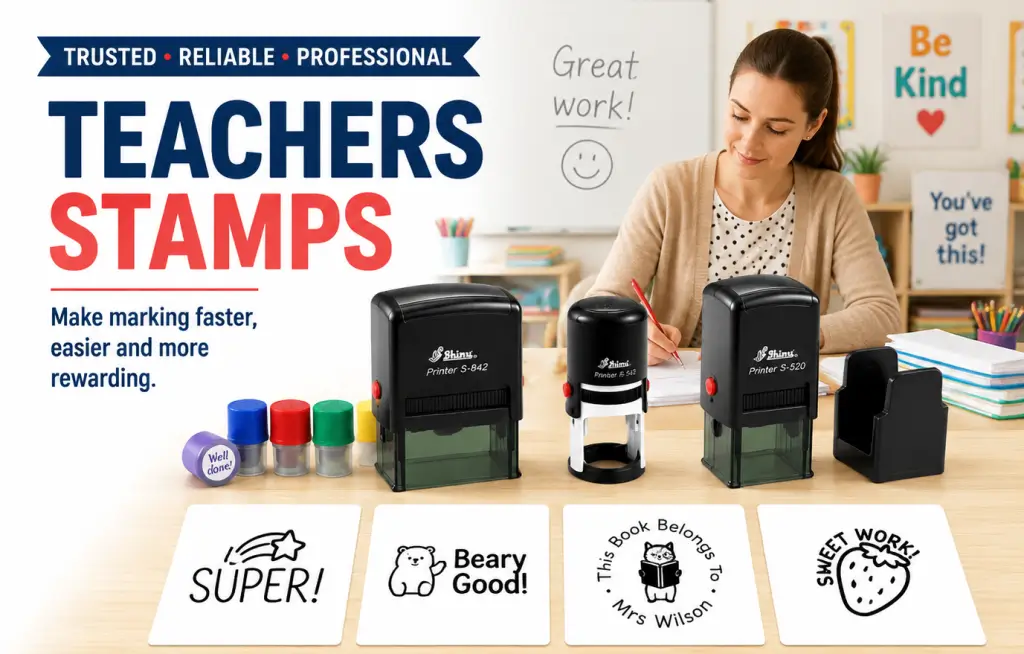
Custom teacher stamps turn the comments you write fifty times a week into a single press. They make feedback faster, more consistent and easier for students to read, which matters when you’ve got a stack of books on a Sunday night.
Feedback and merit stamps for quick, consistent comments
Think about the phrases you write over and over. Common choices include:
- “Checked” or “Sighted”
- “Great effort!”
- “See me”
- “Check your working”
- “Excellent presentation”
- “Homework complete”
A stamp gives every student the same clear message in the same place on the page. Younger students love a fun design, while older students appreciate a clean, professional look. You can then add a short handwritten comment where it really counts.
Name and “property of” stamps for books and classroom resources
Teachers lend out a lot: readers, novels, calculators, folders. A simple stamp such as “Property of Ms Nguyen, Room 12” helps your resources find their way home. It’s also handy for marking your own professional books and planners.
Date stamps for tracking work submission and homework
A self-inking date stamp lets you record exactly when work was handed in. That’s useful for assessment deadlines, homework tracking and conversations with families. Some teachers combine a date with a short phrase like “Received” for a quick, clear record.
School or class logo stamps for certificates and notes home
A logo stamp adds a polished finish to merit certificates, reward cards and notes home. Check with your school before using its logo, as many have guidelines on how it can be reproduced. A class name or mascot stamp is a fun alternative.
Self-inking vs pre-inked vs traditional wooden stamps: which suits a classroom?
Each type has its place. Here’s how they compare:
- Self-inking stamps have a built-in ink pad that re-inks the rubber with every press. They’re fast, clean and ideal for high-volume marking. If you’re new to them, this guide on how to use self-inking stamps is written for businesses but the basics apply just as well in a classroom.
- Pre-inked stamps have ink stored inside the stamp itself, giving crisp, detailed impressions. They’re a great choice for logo designs and certificates where you want a sharp finish.
- Traditional wooden rubber stamps are used with a separate ink pad. They suit larger designs and let you swap ink colours, which is nice for themed rewards. They do take an extra step, so they’re better for occasional use than a fast marking session.
For most beginning teachers, a self-inking stamp is the best everyday marking tool, with a pre-inked or wooden stamp as an optional extra for certificates and special occasions.
Want a stamp that feels like yours? This guide to creating unique designs for custom rubber stamps walks you through layout, fonts and wording.
Dial A Stamp is a family-owned business that has been making stamps since 1982, and every stamp is Australian manufactured. You can get a free proof and quotation anywhere in Australia, and orders placed before 12pm are dispatched the same day, which helps if you’re setting up in the last week of the holidays.
How to Set Up Your First Classroom
Set up your classroom around how you’ll actually teach, not how it looks on social media. Function first, then personality.
Organising your desk and storage
- Keep your desk clear except for daily essentials: planner, pens, stamps and a tray for incoming work
- Use labelled trays or tubs for “to mark”, “marked” and “to return”
- Store spares and less-used items out of sight to reduce clutter
- Keep a small emergency kit nearby: tissues, spare pens, plasters if permitted by your school
Labelling resources and student materials
Clear labels save time and arguments. Try these ideas:
- Label tubs and shelves with words and pictures for younger students
- Number calculators, devices and readers so missing items are easy to spot
- Stamp the inside cover of class books with your name or room number
- Use colour coding by subject or group so students can find materials independently
Creating a welcoming learning environment
A welcoming room doesn’t need to cost much. Start with:
- A student name display or welcome board
- A clear visual of daily routines and expectations
- A space for student work, which you can fill as the term goes on
- A calm corner or reading nook if space allows
Leave some walls bare at first. Filling them with student work over the term is more meaningful than buying posters.
Building Routines That Make Your First Term Easier
Routines are your best defence against burnout. Set them early and protect them.
Marking and feedback routines
- Mark little and often rather than saving it all for the weekend
- Use stamps for quick acknowledgements and save written comments for key tasks
- Try a simple feedback code students learn early, so you can annotate quickly
- Set a time limit per book or task to stop marking from expanding to fill your evening
Record keeping and parent communication
- Keep one central place for notes on student progress, behaviour and wellbeing
- Date stamp submitted work so you have a clear record if questions come up
- Follow your school’s processes for contacting families and log each contact
- Send positive notes home early, not just when there’s a problem
Ask your mentor how your school handles reporting and parent communication. Expectations differ, and it’s much easier to learn them in week one than in week eight.
Protecting your time and energy
- Decide on a finish time most days and stick to it
- Batch similar tasks, like photocopying or emails, into one block
- Borrow and adapt resources from colleagues rather than creating everything from scratch
- Eat lunch, drink water and take your breaks when you can
- Lean on your mentor and other early career teachers, since everyone has been where you are
What Not to Buy (Yet)
Hold off on big purchases until you’ve met your class and settled into your timetable. It’s easy to overspend in the excitement of a new role.
Items that can usually wait:
- Large décor packs and themed displays. You may change room, or find your students want input.
- Bulk resources and workbooks. Your school may already have them, or prefer specific programs.
- Expensive organisers and furniture. Work out your storage needs after a few weeks of real use.
- Paid apps and subscriptions. Check what your school already licenses.
- Novelty stationery. Fun, but rarely essential.
The smart approach is to buy the essentials, invest in one or two genuine time-savers, then add as you go.
Beginning Teacher Starter Kit Gift Ideas
The best gifts for new teachers are useful, personal and things they won’t buy for themselves. If you’re putting together a starter kit for a graduate, aim for practical over pretty.
Personalised gifts that teachers actually use
A custom name stamp or a set of feedback stamps is a thoughtful gift that gets used every single week. You can personalise the wording with the teacher’s name, a favourite phrase or a simple design. Because it’s made to order, it feels special without being impractical.
Practical gifts under a modest budget
If you’re after something budget friendly, try:
- A quality teacher planner
- A pack of good marking pens and highlighters
- A reusable coffee cup or water bottle
- A personalised lanyard
- A small self-inking stamp with a positive message
Gifts from mentors and school leaders
Mentors and school leaders can offer something more meaningful than stuff. Consider:
- A welcome card with practical advice for the first term
- A set of shared resources or lesson templates
- A class set of reward stamps or certificates featuring the school or class name
- A coffee voucher paired with an invitation to check in regularly
Start Small, Then Build Your Kit
Your beginning teacher starter kit doesn’t need to be perfect on day one. Cover the essentials, ask your school what’s already provided and invest in a few tools that genuinely save you time, especially for marking and feedback.
A personalised teacher stamp is one of those small purchases that pays off all year. Whether it’s a feedback stamp, a name stamp or a date stamp for homework, you can request a free proof and quotation and have your custom stamp made in Australia and delivered Australia wide. Good luck with your first term. You’ve got this.
Frequently Asked Questions
What should a first year teacher buy before school starts?
Focus on a planner, basic stationery, marking pens, a few feedback stamps and personal comforts like a water bottle and good shoes. Check with your school first, as many supply core consumables.
Are teacher stamps worth it?
Yes, for most teachers. A feedback or date stamp replaces comments you’d otherwise write by hand dozens of times a week, saving time and keeping feedback consistent.
How long does it take to get a custom stamp made?
Dial A Stamp provides a free proof and quotation Australia wide, and orders placed before 12pm are dispatched the same day. Delivery time then depends on your location.


